Game postponed by an epidemic? Or maybe canceled? A desperate scramble to find a substitute? Minimal chance to prepare? Why does all this seem familiar? But never fear, Cal fans. The second game of the “Wonder Team’s” amazing 1920 season turned out to be a rousing success for the Golden Bears, and provided the first real hint of the greatness to come.
Coach Andy Smith and his “Wonder Team” had begun the 1920 football season with a solid, if unspectacular 21-0 win over San Francisco’s Olympic Club. (For the full story of the Cal vs. Olympic Club game, click here.) The Bears had played excellent defense throughout the game, even sealing the win with a fourth quarter pick six by Charly Erb – a rare feat in a time when the forward pass was still a bit of a novelty. The offense, however, had struggled. All three of the Bears’ touchdowns had resulted from defensive plays or punt returns. Heading into the second week of the season, Andy Smith was looking for offense and expressed particular concern about his backfield, which one local paper described as, “none too promising.”
One bright spot was the return of halfback Albert “Pesky” Sprott. A star for Smith’s 1919 Bears, Sprott had missed pre-season practice because of his trip to the Olympics in Antwerp, where he competed in the 800 meter race. As a result, he had also missed the opening game against the Olympic Club. He was expected to help move the offense against Cal’s next scheduled opponent, Santa Clara University.
Albert “Pesky” Sprott
Epidemic Hits Santa Clara
The Santa Clara game was set for Saturday, October 2, 1920 at California Field on the Berkeley campus. Santa Clara looked to be a good team. They had a 9-0 win over the Olympic Club under their belt and would be coming off a bye. But on Wednesday, September 29, the news broke: an epidemic was running rampant through the Santa Clara team. The San Francisco Examiner‘s William Unmack reported that players were suffering from sore throats and high fevers, and all eleven starters “were in bed with the ailment.” Santa Clara’s vice president, Father Sullivan, said he did not consider the epidemic to be serious, but it did incapacitate the players.
The San Francisco Examiner‘s first report of the epidemic at Santa Clara
The following day, Unmack reported that Father Sullivan had asked California to postpone the game to October 12. But that was a Tuesday, just three days after the Bears were scheduled to play St. Mary’s and four days before they would be hosting Nevada, giving California little time to rest or prepare between games. Meanwhile, the Bears would be left without an opponent on October 2. What’s more, there was no guarantee the Santa Clara team would be recovered and ready to play by October 12. Although Father Sullivan expressed confidence that the epidemic was not serious, no one was certain what the illness was. The Examiner reported that the same illness was “raging in the public schools” of the South Bay, and might spread further. According to Dan Brodie, writing 30 years later in his book 66 Years on the California Gridiron, the illness turned out to be diphtheria. The Bears declined to reschedule, and the Santa Clara game was canceled.
The Thursday afternoon cancellation left Coach Andy Smith with precious little time to find a new opponent for Saturday’s game. He asked USC and Pomona if either school would be willing to make the trip to Berkeley. Pomona already had a game scheduled. USC had an open date, but the Trojans had not yet even started their season. Taking the train up to Berkeley on Friday would give them literally no time to practice or prepare. On October 1, the day before the game was scheduled, the Daily Californian reported that telegrams had been dispatched to Occidental and Whittier Colleges, asking if they would be willing to make the trip, but this seemed unlikely at such a late hour. The Daily Californian further reported that the Olympic Club was interested in a re-match, but called this “the final alternative.” California was guaranteeing its fans that a game would be played, but as of Friday morning, “matters are completely up in the air.”
The Friday, October 1, 1920 edition of The Daily Californian describes the general confusion over Saturday’s game. Note that the Golden Bears were often referred to as “Bruins” in the days before UCLA “borrowed” that name.
California finally secured an opponent at almost literally the last minute. On Friday afternoon a team from the naval base at Mare Island in Vallejo agreed to play in Berkeley the following day. The base had begun fielding a football team during World War I, when it had a constantly changing cast of players, as sailors and marines were transferred in and out of the base. The Bears had played Mare Island twice during the war, along with teams from such military installations as the San Francisco Presidio, the San Pedro Navy Base, Mather Field in Sacramento, and even the Navy Hospital Corps. This phenomenon would recur during World War II, when once again so few regular opponents could be found that the Bears had to look to the Coast Guard base in Alameda and the Pre-Flight Training Center in Moraga for games. The Mare Island team, referred to as the Marines or sometimes as the Sailors, had been competitive in their games thus far, having lost to the Olympic Club 26-13 before bouncing back the previous week to beat St. Mary’s 7-0. The game arrangements might be a rather strange, rushed affair, but at least there was a game!
The Game
During the week preceding the game, Coach Smith had pared back his team by several dozen players, bringing it down to the manageable number of 30 from the more than 300 students who had shown up for try outs two weeks earlier and the 100 who had been on the roster during the Olympic Club game. As expected, Smith announced that Pesky Sprott would start at halfback in place of Andrew “Shad” Rowe. Otherwise, the lineup was largely the same as the previous week.
The game began in a fairly ordinary fashion. The Marines received the opening kickoff and according to the Daily Californian, for the “initial three minutes of play looked as though they were likely to prove dangerous.” But then they fumbled and, “the slaughter started.” The Bears marched down the field and “Sprott tore through outside tackle for the first touchdown.” After the teams traded a couple of few punts, Archie Nisbet rushed for a second touchdown. At the end of the first quarter, the score was a still-reasonable 14-0, with the Bears out-gaining the Marines 49-30. But then came the second quarter.
The Bears began the second quarter by marching down the field for a Sprott touchdown. Then they recovered a Mare Island fumble and ran it back more than 50 yards for another score. Sprott scored again on a 40-yard run. Even California mistakes turned out in their favor. After a Sprott-to-Irving Toomey reverse, Toomey fumbled at the Mare Island 3. But the ball dribbled into the end zone where it was recovered by California’s Lee Cranmer for another Golden Bear touchdown. California out-gained the Marines 120-22 in the second quarter and the halftime score was 49-0. As Doug Montell wrote in the Oakland Tribune, “The first three minutes of the game were excellent. Then California started scoring and after that it was another of those ‘now you chase me’ contests with Mare Island doing the chasing after California backs.”
Andy Smith tried to take mercy on Mare Island coach Lute Nichols and his team by removing his starters at the half, eventually playing all thirty men on his roster except the luckless Walter “Dutch” Eells. But California’s back-ups were eager to show what they could do. They added another 41 points without surrendering a point themselves, and gained another 253 yards of offense. The final score was California 88, Mare Island 0. The Bears out-gained the Marines 422-74.
The Bears excelled in every aspect of the game. According to the Oakland Tribune‘s Montell:
It was not a case so much of Mare Island making misplays (they made few of them), but California being at her best in all departments, that produced all the scoring. California outplayed the navy boys at every angle of the game – punting, forward passing, line bucking [rushing] and field generalship. The Bruins showed enough yesterday to win three or four ball games.
Comparing California’s play to the previous week against the Olympic Club, Montell said he “noticed about 100 percent improvement in the machine-like work of the Bears.” He predicted “a big victorious season for the boys of General Smith.”
The only negatives to be found for California were missed conversions on three of their thirteen touchdowns, all by back-up kickers in the second half, and California losing 29 yards to penalties to zero for Mare Island. In Montell’s view, the Berkeley crowd had been “treated to a first class track meet in which California took the leading part.”
An 88-0 final score is impressive regardless of the competition, and it was biggest score in Golden Bear history to that time. While Mare Island was at best a mediocre team and the game had been hastily arranged, the Marines had just come off a win over St. Mary’s. Fans and sportswriters alike were beginning to show considerable interest in the potential of Andy Smith’s team. Was the 88-0 score a fluke brought on by the unusual circumstances or were the Bears really that good? The next game would be California’s first against a college team, St. Mary’s. As the Daily Californian pondered: “Mare Island defeated St. Mary’s and California meets the Saints next Saturday. Will the score be greater?”
In 1960, the Helms Athletic Foundation reviewed the records and accomplishments of the best college football teams from the beginning of the sport in 1869 to the end of the 1959 season, to decide which team was the greatest of all time. Their answer? The 1920 University of California Golden Bears. Undefeated and untied, they outscored their opponents by a combined score of 510-14. The season was capped off by a 28-0 thrashing of favored Ohio State in the Rose Bowl. Midway through the season, San Francisco Chronicle writer and former Cal football player Clinton “Brick” Morse wrote that they were “a Wonder Team.” Although Cal Coach Andy Smith was unhappy with the hype, the nickname stuck.
In honor of the Wonder Team, we are going to post the story of each of their nine games on the 100th anniversary of the date it was played.
Prelude: Andy Smith Comes to Berkeley
Although the University of California began playing the sport of football in 1882, it abandoned the sport in favor of rugby after the 1905 season. Under the rules of the time, football was extremely dangerous and a number of college players had been severely injured and even killed on the field. Stanford, USC and several other west coast schools joined Cal in making the switch. But after the 1914 season a dispute developed between California and Stanford over the eligibility of freshman players. After a series of increasingly acrimonious negotiations, the schools broke off all athletic competitions between them. This left California looking for a substitute rival, and it turned to the University of Washington. But there was a problem: Washington played American football. The rules of American football had been changed substantially since 1906, making the kind of severe injuries that had occurred in the early days of the sport much less common. And so, just like that, Cal went back to playing American football in 1915.
This created another problem, however. California had a great rugby coach, Jimmy Schaeffer. But he knew almost nothing about football. He did manage to coach the team to a very respectable 8-5 season in 1915, although there was an embarrassing 72-0 loss to Washington. For the 1916 season, however, Schaeffer himself offered the Cal job to a young coach at Purdue, Andrew Latham Smith. Smith accepted, and headed to Berkeley for the 1916 season.
Smith’s first two seasons at Cal were solid, but unspectacular. The team went 6-4-1 in 1916 and 5-5-1 in 1917, playing several games against teams like USC and St. Mary’s, who were also making the transition back from rugby to American football. 1918 provided the first inkling of possible greatness. The Bears’ 7-2 record was good enough to win the championship of the fledgling Pacific Coast Conference and they beat Stanford, which had just decided to start playing football again, by a satisfying score of 67-0.
Coach Andy Smith
1919 was another good season, with the Bears going 6-2-1, including wins over USC and Stanford. But the real excitement that year came from the freshmen. At that time, freshmen were not eligible to play on the varsity squad and had their own separate team. Andy Smith had hired a new assistant in 1918, former Cal rugby player Clarence “Nibs” Price. Price, who had coached high school football in southern California before serving in World War I, had already been instrumental in encouraging Albert “Pesky” Sprott, Stanley Barnes, Cort Majors, and several other outstanding players to attend Cal. Now he brought even more outstanding recruits to Berkeley, including Harold “Brick” Muller, Archie Nisbet, and Bill Bell, all of whom played on the 1919 freshman team. That team went 11-1 in 1919, with the only loss being a one-point heart-breaker against Nevada. And they pounded the Stanford freshmen 47-0. With this group of players now eligible for the Varsity team, it looked like 1920 would be a very good season for the Bears. As it turned out, “very good” wouldn’t be the half of it.
Andy Smith Picks His Team
In that much more casual era, the Golden Bears’ 1920 football practice started on September 15, just 10 days before the scheduled season opener against the Olympic Club. On that day Coach Smith issued a general call to the student body for anyone interested in playing football to show up and try out for the Varsity team. In addition to the 13 letter men returning from the 1919 varsity team and the players from the freshman team, nearly 300 other students showed up for try outs. Coach Smith rapidly dismissed over 200 aspiring football players before dividing the remaining players into teams based on their class years. After a few days of practice, formal games were played. The Seniors beat the Juniors 14-0, while the Freshmen upset the Sophomores 7-0. Then in a “Class Championship” game, the Seniors disposed of the Freshmen 14-7. The third place game was a 38-7 rout by the Juniors over the evidently dispirited Sophomores.
Once these class games were complete, Coach Smith announced the names of twelve players he said, “would form the nucleus of the varsity squad.” Twelve no doubt seems like a paltry number of players to a modern fan, but in those days of extremely limited substitutions, when all players were expected to play both offense and defense, it was not unusual for the starting eleven to play every snap of a game.
The players announced by Coach Smith included several who would be at the very heart of the Wonder Team, Archie Nisbet, Irving “Crip” Toomey, Jesse “Duke” Morrison, Dan McMillan, Bob Berkey, George “Fat” Latham, Cort Majors and Lee Cranmer. Smith noted that “other men would be added to the squad” as they proved themselves in practice. There can be no doubt that Smith had in mind Albert “Pesky” Sprott, a star of the 1919 team. Sprott had missed the pre-season try outs since he had just returned from the Olympics in Antwerp, where he finished sixth in the 800 meters. And Smith was also counting on another returning Olympian, Harold “Brick” Muller. Muller had excelled on the 1919 freshman team before heading to Antwerp to win a Silver Medal in high jump. Smith knew Muller had an amazing arm and was already drawing up plays for him.
The Olympic Club
In the early years of Cal football, the boys in Blue and Gold (they didn’t become “Golden Bears” until 1895) had no nearby colleges or universities to compete against. Therefore, their opponents consisted entirely of teams fielded by local amateur athletic clubs, mostly from San Francisco. The Olympic Club, a private social and athletic club, was founded in San Francisco in 1860. Although it is now an exclusive and expensive club, best known for its golf courses, in 1890 it began sponsoring a football team, known by the nickname of the “Winged O.” Always on the look-out for worthy opponents, Cal Football began playing the Olympic Club in 1892. Eventually the Olympic Club would also play regularly against schools like Stanford, Santa Clara and St. Mary’s, all the way into the 1930s.
There was a whiff of a scandal associated with the Olympic Club team right at the outset. In 1890, other amateur athletic clubs accused the Olympic of luring the best players onto its team by offering them jobs. An investigation was undertaken by the Amateur Athletic Union (“AAU”). It concluded that the Olympic Club was indeed giving jobs to players, but decided this did not make those players true professionals. The AAU coined the term “semi-professional” or “semi-pro” (the first known use of these terms) to describe the Olympic Club players and determined that it was acceptable for such players to compete in amateur leagues.
The Game
Cal’s first game of the 1920 season was set for September 25 at California Field on the Berkeley campus. Classes would not start until the following Monday, and a modest crowd was expected for a relatively low-key match-up. While the Bears had only selected their team a few days earlier, the Olympic Club already had two games under its belt, a 7-0 loss to Santa Clara University and a 26-13 win over the Mare Island Marines, a team fielded by the naval base in Vallejo.
On the morning of game day, the San Francisco Chronicle‘s Dick van Horn told his readers: “The Olympic Club, like all the rest of the football teams hereabouts, is raising the cry, ‘Beat California,’ and will try to live up to the cry today.” Van Horn noted that the Bears had suffered injuries in practice and said, “Andy Smith has had quite a hard time picking his first squad owing to the fact that injuries have taken several men off his squad.” He proclaimed the Olympic Club team to be one of its best ever, and added, “the Winged O warriors have a pretty fair chance of holding, if not beating, the Blue and Gold.”
As might have been expected of players who had only begun practicing as a team a few days earlier, the Bears got off to a slow start. The game was mostly a defensive battle. According to Doug Montell of the Oakland Tribune, “practically the entire game was marked by a punting battle between Morrison of the Bruins [i.e., the Bears] and Dobson of the Olympic Club, in which the Blue and Gold kicker finally came out on top.” The Chronicle‘s van Horn described the first half as “a poor spectacle. It was kick, kick, kick – first California and then the Olympics.” He did commend the strong defense of Cal’s Brick Muller describing the first half as essentially, “Brick Muller versus the Olympic Club, for Brick stopped practically every play during this time.”
Late in the second half the Bears, in van Horn’s words, “began to play a little football.” A big hit by Brick Muller and Bob Berkey forced the Winged O’s star, “Chaff” Charlton, to fumble a punt, and Muller recovered the ball at the Olympic Club 25-yard-line. Two plays later, Cal’s “Duke” Morrison went around left end to score. Toomey kicked the extra point and the Bears went into halftime with a 7-0 lead. Captain Cort Majors warned his teammates not to be complacent. “Okay gang,” he told them, “the score’s nothing-to-nothing. Let’s go to work.” That phrase became the Wonder Teams’ unofficial team motto for the next five seasons.
It was thus the aspect of the game now called “special teams” that led to the first California score. The term “special teams” was not used in 1920, since the same 11 players were on the field for every play, including punts and kicks, as well as offense and defense. So there were no “special” teams, but rather the same team.
The second half remained primarily a defensive struggle, but the Bears began to show strength in what today would be called the “red zone,” both on offense and on defense. As the Chronicle‘s van Horn described it:
The [Olympic] Clubmen made their yards when least needed, that is in the center of the field they went through for ten and twenty yard gains, but when they needed the yards, the California men blocked them up to a standstill. And on the other hand, the California team made its yards when needed, and once inside the ten yard line, nothing could stop them.
In fact, the Olympic Club out-gained California that day by an almost 2-to-1 margin. But every time the Winged O got close to scoring, the mighty Golden Bear defense rose up to stop them.
The Golden Bears’ next score, in the third quarter, resulted from an nice combination of offense, defense and “special teams” play. A long California drive ended in a turnover on downs at the Winged O’s 1-yard-line. Switching to defense, the Bears stopped the Olympic Club from making a first down, forcing a punt from their own end zone. Crip Toomey ran the punt back to the 15 and three plays later Duke Morrison was able to plunge through the Olympic Club line from the 8, for his second touchdown of the day. Switching to his role as kicker, Toomey added another extra point. As the Chronicle‘s reporter described it, “all through the second half, the big hole in the Olympic Club was through center and the guards.” [Note: that seems like a very big hole!]
Trailing 14-0 in the fourth quarter, the Olympic Club’s coach decided he had no choice but to go all-in on the passing game – a still unusual and high risk strategy at the time. The Winged O had some success, completing several passes before disaster struck – a pick six by Cal’s Charly Erb. As the San Francisco Examiner described it:
The final score was as pretty a bit of interception as could be wished for. Charlton gave the signal for a Club forward pass and Dobson sent down a pass fully twenty yards, but Erb of the Varsity jumped high in the air and took the ball and bolted down the field for a 60-yard run to a touchdown.
The Chronicle‘s van Horn reported Erb’s interception return as 70, rather than 60 yards. The Oakland Tribune‘s Montell called it 80 yards. In any event, it was long. Certainly much longer than the 20-yard forward pass by the Olympic Club that preceded it – a distance the Examiner writer clearly found impressive for a pass. Before their season ended, the Bears would change the thinking about what constituted an impressive distance to throw a pass.
Charly Erb – From the 1922 Blue & Gold Yearbook
Final score, California 21, Olympic Club 0. Bay Area sportswriters heaped praise on Charlton and Dobson of the Olympic Club, and the San Francisco Examiner singled out Cal’s Duke Morrison and Brick Muller as “phenoms.” It was a solid win for Andy Smith and his Bears, especially considering how short a time they had been practicing. But it was certainly not spectacular. The Chronicle‘s van Horn opined that the Bears were “still weak in the aerial line,” i.e., the passing game, but found that to be their only significant weakness, at least once they got past a jittery first half.
The Oakland Tribune‘s Doug Montell was more effusive. He agreed that the Bears had played a “mediocre brand” of football for most of the first half, but found that they had really “come alive” in the second half. He believed that “Andy Smith’s warriors showed real knowledge of the great collegiate game of football,” and that considering it was their first game of the season, against one of the strongest Olympic Club teams in years, “the victory of the Blue and Gold is taken as an indication of great strength for the coming Coast Conference season.” The win may have been more impressive than it seemed, as the Olympic Club turned out to be a pretty good team that year. Two weeks later they would beat Stanford 10-7.
The Oakland Tribune’s report on game.
The first game had been played. The 1920 California Golden Bears were 1-0. It was a good start. But how good were they really? Stay tuned!
Nothing could be more fitting than that rugby, one of the University of California’s signature sports, should have brought the first Olympic Gold Medals to Berkeley. The 1920 United States Olympic Rugby team was comprised entirely of northern Californians: six players from Cal, nine from Stanford, five from Santa Clara, and two club players. The captain was a Cal man. These Californians had to convince the United States Olympic Committee to enter a rugby team in the Olympics and although the USOC reluctantly agreed, it had so little interest in the 1920 rugby team that it made them pay their own way to Antwerp. But after a shocking upset over France, that team came home to California with Olympic Gold.
Rugby had a spotty history in the Olympics. The sport was included in the second modern Olympics at Paris in 1900 and again in London in 1908. But it was dropped in 1912. Rugby was also not scheduled to be played in the 1916 Olympics, which were in any event cancelled because of World War I. But in 1920 the sport was set to return at the Antwerp Olympics. Before 1920, the Americans had never entered a team in the Olympic rugby competition. It was not a well-known sport in most of the United States in 1920 and was completely overshadowed by American football. But there was one place in the country where rugby had gained a significant foothold — northern California.
As the sport of college football began developing in the United States in the 1870s and 1880s, the game was closer to rugby than to what is now understood as “football.” At that time the rules under which football games were played tended to vary between regions of the country, and sometimes even from game to game. Not until the 1890s did American football become something a modern fan might recognize. It was in that decade that such concepts as plays beginning from a line of scrimmage and the requirement of making 10 yards in four downs began to be regularized. But early American football became a very brutal and dangerous game. The rules permitted “mass plays” such as the “flying wedge,” which encouraged large numbers of players to slam into each other while running at full speed. And in the absence of the forward pass, there was no reason for any of the players to stay back from the collisions at the line of scrimmage. Combined with the lack of any protective equipment, these tactics led to serious injuries and even deaths on the field. In 1905, 18 young men died playing football in college and club games. These genuine dangers were further exaggerated by the press, which led fans to believe that wholesale death and carnage was to be found on every football field every week.
These safety concerns, as well as a number of scandals about non-students being paid to play in college games, brought college football to a crisis in 1906. President Theodore Roosevelt intervened and encouraged the adoption of new rules to enhance safety. A number of new rules were adopted in 1906, most notably making the forward pass legal. But the California schools did not believe they went far enough. President Benjamin Ide Wheeler of the University of California and President David Starr Jordan of Stanford agreed to abandon the American game altogether in favor of rugby, which they regarded as more of a “gentlemen’s game.” Several other California schools, including Santa Clara and USC, followed the lead of Cal and Stanford and dropped football for rugby.
The 1914 University of California rugby team. Charles Tilden, who would become the captain of the 1920 U.S. Olympic rugby team is standing, fifth from the right. Standing next to him (fourth from the right) is Harry Liversedge, who would win a bronze medal in shot put at the 1920 Olympics and, as a US Marine Corps Colonel, led the invasion of Iwo Jima in World War II.
Rugby remained the primary sport played in California from 1906 to 1914, and Californians became by far the best rugby players in the country. But the students and public never entirely warmed to the sport. They wanted a return to “the American game,” and to be able to compete against teams in other parts of the country. So the University of California re-instituted football in 1915, followed by Stanford in 1918. Rugby continued at both schools as a club sport.
In early 1920 the California rugby team made a triumphant undefeated tour of British Columbia. This success started northern California rugby enthusiasts talking about sending a team to that summer’s Olympics in Belgium. Harry Maloney, President of the California Rugby Union, sent a letter to the United States Olympic Committee requesting that a rugby team be sent to Antwerp. The Olympic Committee was unenthusiastic, to say the least. It did not believe Americans had much chance of success in rugby and was unwilling to spend the money required to field a team. Eventually the USOC did agree to authorize the northern Californians to represent the United States in Olympic rugby, provided they paid for the entire venture themselves. In its letter to Maloney, the USOC said, “Due to the fact that California is the only state playing rugby in the United States, the Committee has decided that, while its sanction will be given for a team to represent the US, the financial aid must come from the State of California itself, and by the men from whom the team will be chosen.”
While the USOC may have expected that this would be the end of the idea of an American rugby team, the supporters of Olympic rugby immediately started a fundraising drive. Contributions were solicited from cities like Santa Clara, San Francisco, Berkeley, and Palo Alto. Support was sought from wealthy and influential individuals like former San Francisco mayor and U.S. Senator James Phelan, and the family of Charles Tilden, a former Cal rugby player. Charity baseball games were held, and even fundraising dances, such as one in Palo Alto featuring the music of a band called the Six Stanford Syncopaters.
In the meantime, try-outs were held. The final selections were made from a pool of 42 players who played three intra-squad matches. The resulting team has been described as, “a collection of rusty rugby players and risky additions, who would have to be taught the game on the way to Europe.” Six of the twenty-two players selected were from Cal: Charles Tilden, who was made captain, George Fish, Matthew Hazeltine, Charles “Red” Meehan, James Winston, and Colby “Babe” Slater. (Slater is claimed by both Cal and U.C. Davis. Although U.C. Davis did not yet exist as an independent university, Slater did his practical work in the study of agriculture at the “University Farm” in Davis, and played on sports teams sponsored by the “Davis Farm.” However, Slater did classroom work in Berkeley, and his degree was conferred by the faculty of the College of Agriculture in Berkeley.) Fish and Hazeltine had played on the varsity Cal rugby teams in 1912 and 1913. Tilden had played varsity rugby for Cal in 1913 and 1914, and had been a member of the Cal football team when that sport returned in 1915.
The money having been raised, the team set off by train from Berkeley to New York on July 28, 1920. They stopped in New York for some sight-seeing and to play a practice match. Then they set sail for Europe on the SS Sherman.
The 1920 U.S. Olympic Rugby team poses on board the SS Sherman on the way to Antwerp. BACK ROW: Davis Wallace (Stanford), John Patrick (Stanford), John O’Neill (Santa Clara), George Fish (California), John Muldoon (Santa Clara), James Fitzpatrick (Santa Clara), “Babe” Slater (California), Cornelius Righter (Stanford). MIDDLE ROW: “Red” Meehan (California), Matthew Hazeltine (California), Harry Maloney (trainer), Charles Tilden (captain – California), Danny Carroll (player/coach – Stanford), William Mulldoon (Santa Clara), Harold von Schmidt (Barbarian Club), Rudy Scholz (Santa Clara). FRONT ROW: Heaton Wrenn (Stanford), Charles Doe (Stanford), Joseph Hunter (Beliston Club), George Davis (Stanford), James Winston (California).
Only four countries entered teams in the 1920 Olympic rugby competition: the United States, France, Czechoslovakia, and Romania. The British had declined to send a team after the French insisted that they could only send one combined team, rather than separate teams for England, Scotland and Wales. And when British Rugby refused to attend, so did the rugby teams from the British Empire and Commonwealth. This was very fortunate for the Americans considering that when the New Zealand All Blacks rugby team toured the western United States and Canada in 1913 they had destroyed every team they played – including notching three blow-out victories at California Field in Berkeley, two against the Cal Bears Varsity squad and one against a combined US national team.
When the American team arrived in Antwerp in mid-August, they discovered that both Czechoslovakia and Romania had dropped out. This meant there would be no preliminary matches, and that the only game would be the final between the Americans and the French for the Gold and Silver Medals. Since the final was not scheduled until September 5, in between practices the California ruggers whiled away the time attending Olympic events and taking sight-seeing trips to Amsterdam and to some of the Belgian battlefields of the just-concluded World War — in which some of the team members, including Cal’s Colby Slater, had served.
Finally game day arrived. The French were prohibitive favorites. They were playing practically a home game, since Antwerp is only 200 miles from Paris. The French were experienced and well-regarded rugby players. The American team, by contrast, was made up of some players who had experience from college, but had not played competitive rugby for several years, and some players who were still just learning the game. As the 5:00 p.m. start time approached, it began to rain heavily. There was a crowd of 20,000 in the stands, the second largest of the 1920 Olympics. They were almost all rooting for France.
The American and French teams battle it out in the rain for the 1920 Gold Medal.
The first half was “a grim war of attrition,” and the half-time score was 0-0. As the pro-French crowd become restless, not seeing the dominance from their team they had expected, the frustrated French team began to play recklessly. In the wet conditions, this was a mistake even against the inexperienced Americans. In the middle of the second half the Americans were able to get the ball close enough to try a 55-yard drop kick. It went between the posts and the Americans led 3-0. Late in the second half, the Americans capitalized on a French dropped ball to score again. One of the American players, Santa Clara graduate Rudy Scholz, singled out three of the Cal players, Slater, Fish, and Tilden, for praise when he described the game for the San Francisco Call:
About the game. It started at 5 PM, (time here for all big matches) and there was a crowd of about 20,000 present, despite the fact it was raining. At a council of war we decided that because the ground was wet and slippery and the ball likewise, we would make it a forward game. The French tried a backfield game, and they lost although they were fast. The slippery ball and field proved their undoing. Our forwards outweighed the French easily, and ‘Babe’ Slater was a wonder in the line-outs, as was Mahoney, Fish, and Tilden. We in the backfield didn’t have one passing rush, but our defense was superb, and Templeton did not have one tackle to make. . . . Score end of first half 0-0. Middle of second half our forwards dribbled to the French’s ten yard line and then we marked a kick directly in front of the goal and [“Dink”] Templeton put it over 3-0. Latter part of second half we dribbled to their five yard line and when the French first five fumbled, [Joseph] Hunter picked it up and fell over the line. Converted. Final score 8-0.”
With that 8-0 victory, the upstart Americans from Cal, Stanford, and Santa Clara had won Olympic Gold, and Charles Tilden, Colby “Babe” Slater, George Fish, Matthew Hazeltine, Charles “Red” Meehan, and James Winston became the University of California’s first six Olympic champions.
The French were in shock. After the Olympics ended, the French rugby union invited the American team remain for several weeks to play other French teams. The Americans scored wins of 26-0 in Lyon, 14-3 in Toulouse, and 6-3 in Bordeaux, demonstrating that their Olympic victory had not been a fluke. Only in the final game, back in Paris, did France prevail, 14-5. A new French star emerged in that game, Adolphe Jaurenguy. The Americans would see more of him in 1924, when the French tried (and, as will be seen in a later story, failed) to get their revenge on another U.S. Olympic rugby team which included more players from the University of California.
GO BEARS!
_________________
Sources
Blue and Gold Yearbooks, 1912, 1913, 1914, 1915, The H.S. Crocker Co, Inc., Berkeley, CA (1913-16)
Miller, John J., The Big Scrum: How Teddy Roosevelt Saved Football, Harper Collins, New York (2011)
Phillips, Ellen,The VII Olympiad, World Sport Research & Publications, Inc., Los Angeles (1996)
Rugby at the 1920 Antwerpen Summer Games: Men’s Rugby, SR/Olympic Sports (2012)
Rugby at the Olympics, RugbyFootballHistory.com (2012)
Rugby Union at the Summer Olympics, Wikipedia (2012)
Ryan, Mark, For the Glory: Two Olympics, Two Wars, Two Heroes, JR Books, London (2009)
Tibballs, Geoff, The Olympics’ Strangest Moments: Extraordinary But True Tales from the History of the Olympic Games, Anova Books, London (2004)
Watterson, John Sayle, College Football: History, Spectacle, Controversy, The Johns Hopkins University Press, Baltimore (2000)
(NOTE: For anyone wanting more detailed accounts of rugby at the 1920 and 1924 Olympics, I highly recommend the book by Mark Ryan.)
What is the University of California’s most spectacularly successful sport ever? A good argument can be made for rugby, with its 33 national championships. Or swimming, which especially in recent years has brought Cal a multiple of medals and championships. But an equally good argument can be made for crew. Rowing is certainly Cal’s oldest organized sport. It has earned 22 national championships (17 men’s, 5 women’s) and has sent 73 Cal students and alumni to the Olympics, where they have won a total of 42 Olympic Medals, 34 of them Gold. And in 1928, 1932, and 1948, it was the Cal Bears as a team who won Olympic glory for the United States. If all that weren’t enough, since the 2019 Big Row, Cal Men’s Crew holds a 67-19 record all-time against arch-rival Stanford in dual meets, while Cal Women’s Crew has an all-time record of 27-13 against Stanford. What follows is just some of the extraordinary history of one of Cal’s greatest sports.
Cars carrying members of the Cal Crew team back from their triumph at the 1928 Amsterdam Olympics make their way up Telegraph Avenue to a tumultuous greeting from the student body
In was in 1870 that a group of Cal students formed a rowing club — the University of California’s first sporting activity. This was just two years after the founding of the University of California, when the campus was still in Oakland and building at the anticipated new campus in Berkeley had not even begun. The rowing club was founded 12 years before the advent of the sport of football at Berkeley, more than 20 years before women’s basketball began, and more than 30 years before men’s basketball. On October 15, 1875, students formally established the University of California Boat Club as an official University-sponsored club, with officers, dues, and a plan to build a boathouse on the Oakland estuary.
The minutes of the founding meeting of the University of California Boat Club on October 15, 1875
Competitive rowing against other institutions would have to wait, however. Although rowing had been wildly popular at the east coast Ivy League schools since the 1850s, it was a brand new sport in the west. Not until 1895 did the University of California Boating Association row its first race against an outside competitor, the Columbia Rowing Club of Oakland. In 1899, the Cal team traveled north to participate in the Astoria Regatta, against rowing clubs from around the west, where the Bears won their first championship: the Feldenheimer Trophy.
Cal’s first championship team at the 1899 Astoria Regatta: coxswain Francis Wilder, #4 Clifton Tracy, #3 Roy Fryer, #2 Frank Waggerhouser, #1 Jimmy Hopper
Eventually Stanford formed a crew team, and in 1902, California hosted them in first intercollegiate rowing competition in the west, the Bears winning convincingly. The University of Washington had also established a crew team and the following year, 1903, Cal faced for the first time the school that would become — and remain to this day — its biggest rival in crew. As would happen all too often over the following decades, Washington came away the victor.
In 1907, the three west coast crew schools, California, Washington, and Stanford, began racing eight-oared boats, the most prestigious of crew races. Cal was fortunate that its 1908 team included an oarsman named Dean Witter. Witter was an outstanding athlete and was the “stoke” on the eight-oared boat. The “stroke” is the #8 rower, who sits directly in front of the coxswain. It is the stroke who sets the cadence for the rest of the crew, and the coxswain counts the cadence off the stroke’s oar. But the Bears were fortunate to have Dean Witter on the crew not only because he was an outstanding stroke, but also because he went on to become the most famous stock broker in the west. He was a life-long supporter of Cal crew, and established an endowment fund for the sport, which has helped keep crew successful at Cal for nearly a century.
The 1908 Cal eight-oar crew. Back row: Manager John Tyssowski, #5 Harold Ashley, #6 Oswald Robertson, #7 Tom Davidson, #2 Ivan Ball, #8 Dean Witter, Coach E.M. Garnett. Front row: #1 H.H. Dignan, #4 Fred Ashley, coxswain Paul Myers, #3 W.H. Schroeder.
Washington became a perpetual thorn in Cal’s side in the 1910s. The Huskies were unquestionably the best crew on the west coast, and one of the best in the nation. California did not beat them once in that decade. A heartbreaking loss came in 1919, when a very close race was awarded to Washington. Movies that were not developed until the next day showed that Cal had actually won, but this not-so-instant replay was of no help to the Bears. But in 1921, Cal Coach Ben Wallis finally led the Bears to a victory over the Huskies and to their first trip to the Intercollegiate Rowing Association (“IRA”) Regatta in Poughkeepsie, New York. The IRA Regatta was, and still is, the national championship for men’s crew. The Bears, who were lightly regarded by the easterners, created a stir by finishing second to a very strong Navy team.
A problem in the early days of Cal 8-oared crew was transporting the shells from the campus to the Oakland estuary, seven miles away!
In 1924, California’s crew fortunes took an enormous turn for the better when Caroll M. “Ky” Ebright was hired as coach. Ebright had been the coxswain for Washington, before serving as a pilot in the Army Signal Corps in World War I. He took the Cal coaching job with the strong encouragement of his alma mater, the University of Washington. Stanford, tired of perpetually losing to California and Washington, had quit crew in 1920 (they would bring it back a few years later). Washington feared Cal might do the same, leaving it without a single college opponent west of Wisconsin. As it turned out, Washington might have done better to keep Ebright in Seattle.
Under Ebright, California began steadily to close the gap with Washington. In 1924, Cal lost to Washington by ten boat lengths. In 1925, they lost by eight lengths, and in 1926 by five. In 1927, California finally won, beating the Huskies by four lengths. And the Bears finished third that year at the IRA Regatta in Poughkeepsie.
All along, Ebright had his sites set on 1928, and the Olympics in Amsterdam. At this time, the United States selected Olympic crew teams as a unit, rather than as individual athletes. Schools and clubs entered their boats in the Olympic trials, and the entire winning team became the American Olympic representative. Navy had won the Gold Medal for the United States in the prestige event of eight-oared rowing in 1920, and Yale had won the Gold in 1924. Ebright wanted California to have that chance in 1928.
The 1928 Golden Bears beat Washington by half a length in a dual meet, and then beat Columbia, the defending IRA champion, by a length at Poughkeepise, in the process beating the course record which had stood since 1901. Then they went to Philadelphia for the Olympic trials. After beating Princeton and Columbia in the early heats, California faced heavily favored Yale in the finals. The Bears took off fast, and led the entire way, winning by 1.2 seconds. The Bears were Olympians.
California defeats favored Yale in the finals of the 1928 Olympic trials to win the right to represent the United States at the Amsterdam Olympics
The Olympic course in Amsterdam was on the Sloten Canel, a narrow canal in the heart of the city. Only two boats could race at a time, requiring numerous heats. The Bears, now “Team USA,” easily defeated Belgium, Denmark, and Italy to reach the semi-finals. There they faced a tougher challenge from Canada, but the Bears won by half a length. In the finals, the British team pulled out to a strong start, but the Bears caught and passed them with 500 meters to go in the 2000 meter race, winning Olympic Gold.
The University of California, representing the United States, wins the Gold Medal race against Great Britain at the 1928 Olympics in AmsterdamThe Victors’ Wreath is placed on the Cal boat after the Bears’ 1928 Olympic victory1928 Olympic Champions: coxswain Don Blessing, #8 Pete Donlon, #7 Hub Caldwell, #6 Jim Workman, #5 Bill Dally, #4 Bill Thompson, #3 Fran Frederick, #2 Jack Brinck, and #1 Marvin Stalder
The Bears were greeted like conquering heros upon their return to Berkeley, complete with a rally at the Greek Theatre before an overflow crowd. But for Ky Ebright, this was only the beginning. Although his entire 1928 team would graduate in the next two years, he was determined that the Bears would return to the Olympics in 1932. Knowing that those Olympics were to take place in Los Angeles, Ebright began using the slogan “California’s crew in California’s Olympics.”
The 1932 Bears did indeed appear to be on a mission. They beat Washington in a dual meet by an unprecedented 18 lengths. Then they beat both Washington and Cornell to win the IRA Regatta. At the Olympic trials, they beat Princeton and Columbia easily, before nosing out Pennsylvania by 0.12 seconds to win another berth in the Olympics.
At the course in Long Beach, the Bears, once again serving as “Team USA,” easily won their preliminary heat against Canada, Germany, and New Zealand. In the final, they faced Italy, Great Britain and Canada. It turned out to be one of the closest races in Olympic history, with all four crews vying for the lead throughout. Italy actually had a three-foot lead just two boat lengths from the finish. But the Bears powered past them at the last moment to win by less than a second. California had won its second straight Olympic Gold.
The California eight team (at the back of the photo) finishes the extraordinarily close 1932 Gold Medal race just ahead of Italy (foreground), with Canada in third place. The tip of the fourth-place British boat can be seen at the far right, between the Canadian and Italian boats. Note the numerous unsightly oil derricks on the shore at Long Beach.The 1932 Olympic Champions. Standing: #8 Ed Salisbury, #7 James Blair, #6 Duncan Gregg, #5 Dave Dunlap, #4 Burt Jastram, #3 Charles Chandler, #2 Harold Tower, #1 Winslow Hall. Front: coxswain Norris Graham, starboard alternate Herm Holman, port alternate Hayes McLellan, Coach Ky Ebright.
California remained one of the great rowing powers throughout the 1930s. Cal hoped to compete at a third straight Olympics in 1936, but those hopes took a blow when the Bears’ #5 oarsman, Al Daggett, broke his ribs in a motorcycle accident shortly before the Olympic trials. The #5 oarsman, who sits in the middle of the boat, is the “power” man, the strongest rower on the team. After Daggett’s loss, the Bears finished second to the Huskies, who went on to win their only Gold Medal at the Berlin Olympics, their story forming the basis for the recent bestseller, The Boys in the Boat by Daniel James Brown.
In the late 1930’s the Bears had a couple of notable oarsman who, although they worked as hard as anyone on the team, were not quite good enough to make the varsity squad. Robert McNamara, who would become the controversial Secretary of Defense under Presidents Kennedy and Johnson, was on the freshman squad in 1936, and then became a team student manager in 1937. Eldon Peck did better, making the junior varsity crew in 1937 and 1938 as the stroke, or #8 oarsman. He was not quite tall enough to be successful on the varsity squad. However, he was tall enough to become an Academy Award winning actor after he changed his name to Gregory Peck. Peck later summed up his feelings about what he learned from Coach Ebright and the experience of Cal crew:
It’s the most grueling sport known in college. It’s a sport where strong men faint as they go over the finish line because they have spent every last ounce of their strength and consciousness. Your chest feels like cement, your legs feel like rubber, your mind is numb, your back feels broken, but you learn never to give up. . . . Anyone who’s rowed a four-mile race knows what’s expected of him. He understands the agony of the last mile or half mile, and the knowledge that you can’t quit, even if you die. That has to have some effect on his character.
Peck and one of his teammates stowed away in the baggage car when the varsity team headed to Poughkeepsie for the 1938 IRA Regatta. They stayed in New York City for a visit after the Regatta, where the Peck got his first taste of Broadway theater.
As the 1930s drew to a close, Ky Ebright had what he considered to be his greatest team ever. The 1939 Bears beat Washington in a dual meet so soundly, that they insultingly turned their boat around and rowed back across the finish line before the Huskies had made it across that line the first time. At Poughkeepsie, they shattered the course record for the four-mile race in winning the IRA Regatta national championship. This great Bears team had hopes of another Olympic Gold Medal the following year, but the 1940 Olympics were cancelled because of World War II, as were the 1944 Olympics.
But the Bears were ready for another shot at Gold when the Olympics finally returned in London in 1948. At the 1948 Olympic trials, California’s only real competition was Washington. They met in the semi-finals, where the Bears edged the Huskies by three feet, over a 2,000 meter course. California then beat Harvard easily in the finals to win the right to compete in their third Olympics.
The 1948 Olympic rowing events took place at the famous course at Henley-on-Thames. Ky Ebright brought the launch he used at Cal, the Oski III, to London. It was temporarily painted red, white,and blue for the occasion, but its colors were restored to blue and gold when the team returned to Berkeley.
Coach Ky Ebright aboard his launch, the Oski III
The California team faced no real competition at the 1948 Olympics. They won every preliminary heat by multiple boat lengths, before besting the British team in the finals by two lengths. The Bears had won an unprecedented third Olympic Gold Medal, the most by any crew team. Navy and Yale have two Gold Medals each, and Washington one. In the 1960s the U.S. Olympic Committee began selecting crew athletes individually, rather than selecting a school or club as a unit. Thus, Cal’s record of three Olympic Championships is unlikely ever to be broken.
The 1948 Olympic Champions follow tradition by throwing coxswain Ralph Purchase into the Thames in celebration of their victoryThe 1948 Olympic Gold Medalists stand at attention for the playing of the Star-Spangled Banner at Henley-on-Thames. Left to right: coxswain Ralph Purchase, #8 Ian Turner, #7 David Turner, #6 Jim Hardy, #5 George Ahlgren, #4 Lloyd Butler, #3 Dave Brown, #2 Justus Smith, and #1 Jack Stack.
Ky Ebright retired as Cal’s Crew coach in 1959, not by choice, but because at that time Cal had a mandatory retirement age of 65. His career ended with three Olympic Gold Medals and six national championships (1928, 1932, 1934, 1935, 1939, and 1949). His 35 years as Cal’s head coach is a record for any Cal coach in any sport. Ebright and all the members of his 1928, 1932, 1939, and 1948 teams have been inducted into the National Rowing Hall of Fame.
Ebright was a tough act to follow, but Cal had considerable success under his successor, Jim Lemmon. Under Lemmon, the Bears won national championships in 1960, 1961, and 1964. Then they fell on hard times, winning only a single national championship (1976) between 1965 and 1998. However, recent years have seen a renaissance in Cal Crew, which has once again become one of the dominant national powers. The Bears won the IRA national championship in 1999, 2000, 2001, 2002, 2006, 2010 and 2016.
Cal established a women’s crew team in 1974, after the enactment of Title IX. Women’s Crew won Cal’s first women’s national championship in any sport in 1980, and have won four more national championships, in 2005, 2006, 2016 and 2018. But perhaps the most extraordinary year for the women’s team was 2010, when the Bears finished second in the national championships led by coxswain Jill Costello, just weeks before her death from lung cancer. (If you have not read the extraordinary and moving Sports Illustrated article “The Courage of Jill Costello,” you owe it to yourself to do so.)
And while Olympic teams are no longer selected by school, Cal continues to send numerous individual students and alumni to the Olympic games. A total of 74 Cal Crew athletes and coaches have gone to the Olympics, representing eight different countries, and Cal men’s and women’s crew athletes have won a total of 34 Gold Medals, 5 Silver, and 3 Bronze.
The tradition of Cal rowing, begun by a group of students in 1870 and growing into three Olympic Gold Medal teams under Ky Ebright, continues to bring honor to the University today, along with national championships and Olympians. Crew is one of Cal’s grandest sports.
A few years ago I was reading an article about the all-time greatest games by Cal running backs and came across this amazing statistic: Jerry Drew vs. Oregon State (1954) – 283 yards on 11 carries. That’s 25.7 yards per carry. I got to wondering: who was this Jerry Drew? Why had I never heard of him? Turns out, he wasn’t even a starter, and he did virtually all of it in a single half.
Jerry Drew
In November 1954, Jerry Drew was a junior reserve fullback who had never started a game. The Oregon State game, on November 13, was the second-to-last game of the season. As usual, Drew saw only limited action in the first half. By halftime he had 4 carries for 15 yards. By the middle of the third quarter, Cal had a 25-0 lead, and it was time to start playing the back-ups.
Drew came in and ran for a 67-yard touchdown. Then he ran for a 59-yard touchdown. Then he ran for a 55-yard touchdown. He added 4 more carries for another 87 yards, for a total of 268 yards on 7 carries in the second half. (That’s 38.3 yards a carry in the second half!) By the time the game ended in a 46-7 Cal victory, Jerry Drew had run for a total of 283 yards, breaking Johnny Olszewski’s Cal single-game rushing record of 269 yards. Drew’s single-game rushing record would stand for 54 years, until it was broken by Jahvid Best against Washington in 2008. His record of 268 yards in a half still stands, not only as the Cal record, but as the Pac-12 record as well. It is the oldest existing rushing record in the Pac-12.
Jerry Drew rushing against Oregon State
Unsurprisingly, Drew got his first Cal start in the next game, against Stanford. He looked good, rushing for 119 yards on 13 carries, including a 27-yard touchdown – although that paltry 9 yards per carry really brought down his average!
Drew plowing through a tackle in the 1953 Washington State game
Drew missed the entire 1955 season with injuries, but played his senior year in 1956. He was unable to regain the magic he had against Oregon State and Stanford, and gained only 109 yards on 42 carries in his entire senior year. But what an extraordinary day he had against the Beavers!
It is not widely known that it was the University of California, Berkeley, which gave the world the very first women’s college basketball team. The Cal women became the first women’s team to play a basketball game as the representatives of their school the fall of 1892, less than a year after the game of basketball had been invented by James Naismith. Four years later, the Golden Bears played the first women’s intercollegiate basketball game in history — against arch-rival Stanford, of course. The Cal women were the powerhouse of women’s basketball in the west in the late 1890s. And the women accomplished all this more than a decade before the Cal men ever thought of playing intercollegiate basketball. Here is the story of the beginning of women’s college basketball, right on the Berkeley campus.
Before we are inundated by hordes of outraged Smith College fans, let me give due credit to Senda Berenson, the “Founding Mother” of women’s basketball. Shortly after James Naismith invented the game of basketball in the fall of 1891, Berenson, a physical education instructor at Smith College, read about the new game and decided it would be excellent exercise for the women in her classes. She introduced the sport to her students, and by the spring of 1892 they began playing intramural games between the freshmen and sophomores.
Senda Berenson, the Lithuanian Jewish immigrant who became the “Founding Mother” of women’s basketball
Basketball as a sport for women caught on around the country immediately. By the fall of 1892, a group of women at the University of California in Berkeley formed a team to represent the University in games against outside opponents. They were inspired by “physical culture” professor Walter E. Magee, who introduced the game to the Berkeley campus, and became, unofficially, the first Cal basketball coach.
On November 18, 1892, the Cal women’s team played a game on the Berkeley campus against a Berkeley prep school called Miss Head’s School. This was just eight months after James Naismith’s men’s teams played the first public basketball game ever. The game between California and Miss Head’s School was the first women’s basketball game played in the western United States. Even more significantly, it was the first game ever played by a college women’s team against an outside opponent, making the Golden Bears the first women’s team ever to represent their college in a basketball game.
The game was played on the Berkeley campus at the original Harmon Gymnasium (located at the site of present-day Dwinelle Hall):
Old Harmon Gymnasium was built in 1879 and was the fourth building on the University of California campus. It was torn down in 1933.
According to an article by Albert May of The San Francisco Call, Miss Head’s School prevailed by a score of 5-4 on a last-minute basket. Although only women were permitted to attend the game, May managed to arrive early and conceal himself in Harmon Gym. May’s article demonstrates the condescension and sexism with which women athletes were faced from the very beginning. Under the headline, “Berkeley Beauties Have a Glorious Game,” May provided very little information about the actual game, instead spending most of the article describing the physical appearance and the clothing of the players. He described the Cal team as, “nine of the handsomest, best-shaped, loveliest co-eds in the whole world,” who were “costumed in blue bathing suits with gold ribbons,” although May later conceded that they were actually wearing “gymnasium outfits.” And he described the team from Miss Head’s School as “nine cute little misses.” He did concede, however, that the players on both teams played hard and were thrilled to be able to play a competitive sport:
All the fair athletes were nearly exhausted, and it was absolutely impossible to find a single girl among them which did not have numerous bruises or had not sustained some slight injury. But, oh, how happy were they all. “Now we have a game that beats their old football to pieces,” they said, as they painfully filed out of that gymnasium, wrapped in cloaks to hide their torn costumes and shapely figures from masculine eyes.
After the 1892 game with Miss Head’s School, the Cal women spent the next few years playing only intramural games among themselves. In the meantime, the founding of Stanford University in 1891 had finally given Cal students the close collegiate rival they had been lacking for so long. The Stanford women established a basketball team in 1895 began playing prep schools and clubs. In February 1896, the Stanford women felt they were ready to beat the Bears, and issued a challenge for a game to the women in Berkeley. A group of Cal women decided to assemble a team and accepted the challenge. The game against Stanford would be their first game.
The first women’s intercollegiate basketball game ever was set to be played at the Page Street Armory in San Francisco on Saturday, April 4, 1896. In fact, not only was the 1896 Cal-Stanford game the first intercollegiate women’s basketball game, it was also the first women’s intercollegiate competition in any sport in American history.
The game created quite a stir in the San Francisco Bay Area. As yet, no men’s college basketball was being played in the west. In fact, the Cal men would not play their first intercollegiate basketball game until 1907 — eleven years in the future. So the women were not only pioneers in women’s sports, but also pioneers in introducing the brand new sport of basketball to the west coast and into the Cal-Stanford rivalry.
Men continued to be banned from attending the game because it was considered unseemly for them to witness scantily-clad (by the standards of the time) young women running around, rough-housing, and perspiring. In light of the salacious tone of Albert May’s article about the 1892 game, it is not surprising that the young women did not wish to be subjected to that type of attitude from male attendees. At Stanford’s insistence, even the Cal coach, Walter Magee, was excluded from the game. Despite the ban on men, there was such enormous interest in the contest by the women of Cal and Stanford that it was a sell-out, with an attendance in excess of 700. The admission charge was 50 cents, with a portion of the California team’s profits going into a fund to support an upcoming tour of the east coast by the Cal men’s track team. Thus, women’s sports at Cal began by providing financial support to men’s teams.
The game was played nine-on-nine, in two 20-minute halves. The court was divided into three zones, with three players from each team assigned to, and required to stay within, each zone. There was no dribbling, but players could run no more than five feet before they had to pass the ball to a teammate, while their opponents tried to intercept the pass. The rules for women’s basketball laid down by Senda Berenson at Smith College had been written to ensure that the game remained “ladylike,” with efforts to bat or snatch the ball away from opponents and other “rough play” banned. But the young women out west were made of sterner stuff, and the team captains, Elizabeth Griswold for California and Stella McCray for Stanford, agreed to rules which allowed their teams to play a more aggressive game than the easterners.
The starting nine players for the University of California in this historic game were Elizabeth Griswold (captain), Mary McCleave, Blanche Terrill, Helen Grace, Clara Williams, Mabel Palmer, Katherine Jones, Edith Brownsill (also student manager), and Edna Robinson. Sarah Hanscom and Bertha Knight were the substitutes.
The San Francisco Examiner’s illustration of Cal’s starting nine.
All the local newspapers, including the San Francisco Chronicle, the San Francisco Call, the San Francisco Examiner, and the Oakland Tribune, sent women reporters to cover the game, and gave it extensive coverage. The Chronicle reporter, Mabel Craft, also wrote for Leslie’s Weekly Magazine, which gave the game national coverage. Craft had a special interest in the game. She had graduated first in her class from the University of California in 1892, but had been denied the University Medal which was awarded to the top graduating senior, because the new University President declared that the Medal would henceforth be reserved for men. The second-place graduate, Joseph Garber, refused to accept an honor which he did not believe he had earned, and the Medal went unclaimed that year. Craft would have a distinguished journalistic career, be the first woman editor at the San Francisco Chronicle, and become a campaigner for civil rights for African-Americans and for women. She saw women’s basketball as a means of demonstrating the physical and mental abilities of women.
The game itself proved to be low-scoring, to say the least. The fact that the backboard had not yet been invented made the distance to the basket difficult to judge, and meant that shots had to be extremely accurate to make it into the basket. Players were also prohibited from using two hands to shoot the ball, further hampering their accuracy. And the three forward players for each team were definitely not extremely accurate. Nevertheless, the crowd was very enthusiastic, and both the Cal players and the Stanford players, attired in blue and red, respectively, fought hard. According to the Chronicle‘s Mabel Craft, the crowd jammed the gallery at the Armory and “roared until the glass doors in the gun cases shivered at the noise.”
Illustration of the April 4, 1896 Cal-Stanford game from Leslie’s Weekly Magazine. The California players have “UC” on the front of their uniforms. The woman in the jacket is the umpire, Miss Ada Edwards of Stanford. The referee was Mrs. W. E. Mcgee, the wife of the Cal coach.
Craft described the game as “snappy,” with, “many calls for time and some disputes.” Craft continued, “Enthusiastic captains claimed fouls, and some were allowed. Sometimes with a slump and a slide, three girls would dive for the ball, and end in an inextricable heap of red, white, and blue. In less time than it takes to read it, they were all planted firmly on their two feet, flushed, perspiring, intensely in earnest, and oblivious of everything except that ball.”
Craft was enthusiastic about the athletic ability shown by the players, and thought that the game demonstrated that women were not the frail creatures, prone to hysteria, so often portrayed by the medical profession and society as a whole. “Basket-ball wasn’t invented for girls,” she wrote, “and there isn’t anything effeminate about it. It was made for men to play indoors and it is a game that would send the physician who thinks the feminine organization ‘so delicate,’ into the hysterics he tries so hard to perpetuate.”
Baskets counted as one point. Stanford drew first blood when Miss Mattie Clark scored 10 minutes into the game. Five minutes later, Miss Katherine Jones of Cal tied the game with a basket of her own. The game remained a 1-1 tie at the half, when the players rested on the floor of the Armory, snacking on orange slices. The second half was scoreless until, at the very end of the game, Miss Frances Tucker of Stanford made a free throw for the win. Final score: Stanford 2, California 1. Despite the loss by her alma mater, Mabel Craft wrote that the game had been a great success for women’s athletics. According to the Chronicle, the game was, “the first great struggle in feminine athletics.”
Mabel Craft’s story about the game, from the April 5, 1896 San Francisco Chronicle
The Stanford team was greeted at the Palo Alto train station by a large and enthusiastic crowd. Each of the women on the Stanford team was awarded a varsity letter – something that would not happen again until after the passage of Title IX in the 1970s made it mandatory for colleges to provide women with the opportunity to play varsity sports. Jane Stanford, the University’s co-founder and sole Trustee, sent the team a note of appreciation for their efforts.
The 1896 Stanford women’s basketball team. The players were: Stella McCray (captain), Agnes Morley, Jessie Ryan, Lena Ducker, Anita Corbert, Frances Tucker, Mattie Clark, Esther Keifer, and Mayme Merritt.
The game received coverage by newspapers as far away as New York. Two weeks after the game, the New York Sun ran a lengthy article which began by noting its significance:
The new girl made her debut in the arena of intercollegiate sport in California last week, and opened up no end of entrancing possibilities for the future gaiety of nations, while putting up as pretty and smart an exhibition of athletics as has been seen on the Pacific slope. The women students of the University of California met the women students of Stanford University in a game of basketball in San Francisco for the championship of the coast. There have been games of basketball between girl teams before, but this was new in bringing together representative teams from two universities.
The New York Sun mentioned a notorious “hair-pulling incident” which had recently occurred during a basketball game between two New England prep schools, and praised the California and Stanford teams for their far more serious approach to the game. “The California girls evidently felt that the eyes of the feminine athletic world were on them, or would be scanning their performance later, and they went in just to play ball of a kind that would be beyond criticism and beyond comparison.”
The California players were disappointed by the loss to Stanford, but also determined to re-double their efforts to achieve athletic excellence. Soon an entire league of women’s basketball teams was established, with California and Stanford being joined by teams from Mills College in Oakland, the University of Nevada in Reno, and several teams sponsored by various YWCAs. California quickly became the dominant team, going undefeated in 1898, including lop-sided wins of 10-1 against the Mission YWCA, and 13-1 against Mills College. The Bears played Nevada in Berkeley on April 9, 1898. The Nevada players were treated to lunch at one of the dorms in Berkeley, and spent the night at the homes of the Cal players. California continued its basketball dominance, defeating Nevada 14-1. The Cal women were praised by The San Francisco Chronicle for having displayed as much guile and trickery as the Stanford football team! The Chronicle‘s Mabel Craft told readers that this game was so physical that it, “would have crushed into fine powder those Dresden china shepherdesses who had the honor to be [these players’] grandmothers.” Craft added, “Fourteen to one was the tune to which the Berkeley co-eds literally and figuratively wiped up the floor of the Odd Fellows’ Hall yesterday with their guests from Nevada. It is not a polite way to treat visitors, but almost anything goes in basket-ball.”
Despite their big loss, the Nevada team enjoyed the trip to Berkeley so much that they agreed to return the following year. Nevada had hired a new coach, Ada Edwards, who was a former Stanford coach and had been the umpire at the first Cal-Stanford game in 1896. She taught her team to play much more aggressively. And, in a demonstration that the west coast game was not the “ladylike” affair still favored back east, the 1899 game was played so ruggedly that one Nevada player had her nose broken as she was elbowed during a scramble for the ball. California won the game, but the 7-3 final score was much closer than the prior year, and the all-female crowd was very excited and enthusiastic throughout.
The sport reached another milestone when the 1900 Blue & Gold yearbook covered basketball (which was still only played by women) for the first time, and on equal terms with men’s sports. The yearbook editors apologized for having neglected the sport in previous years. They provided the full rosters and scores of the undefeated 1897-98 and 1898-99 seasons and included this team photo:
TThe 1898-99 Golden Bears: Alma Stockwell (captain), Emma Stoer, Allie Kelshaw, Alice Farno, Gertrude Longmore, Ethel Catton, Louise Linscott, May Haworth, Ella Stockwell, Lucile Turner, and Lulu Rued.
The Blue & Gold summed up the achievements of the Cal women thus:
Although the indoor pig-skin chasers do not strive for the glaring publicity which so delights their brethren of the football field, the University of California team occupies a proud position in basketball circles — an eminence so lofty that they can uniformly dictate the conditions on which others may contest with them, and just as uniformly emerge victorious from the struggles in which they engage.
In light of the great success of the Cal women, a vote was held among Cal’s existing varsity lettermen in 1898 to decide whether the women should be awarded varsity letters. The letter holders — all men, of course — voted to deny the women varsity status. The acerbic Mabel Craft, possibly still smarting from having being denied the University Medal because of her gender, thought that the Cal men — who had yet to win a Big Game against the Stanford football team — were envious of the greater success of the women. Craft wrote, “The athletic girls from the Berkeley hills proved that if the young men can seldom win at anything, the girls at least are capable of upholding the college honor.”
According to the Oakland Tribune, the denial of the varsity letters was officially justified on the ground that “basketball is not an established inter-collegiate game.” But the San Francisco Call reported that the real reason was that a number of professors opposed women’s participation in sports. “It is a well-known fact that certain of the professors are opposed to this line of athletics for the young women, on the grounds of the violent effort required in it and of the tendency it might have to destroy their femininity.”
The Stanford women were having an even more difficult time of it. Despite the enthusiasm of the students and Mrs. Stanford over the 1896 win against California, the Stanford faculty and, most particularly, University President David Starr Jordan, found women’s participation in serious athletic endeavors to be unseemly. In 1899 the Stanford faculty athletic committee abolished women’s intercollegiate sports at Stanford, “for the purpose of guarding the health of the individual player.” Stanford announced that all teams sports were henceforth banned because, “the physical strain upon the young women is too great.” The most vehement rejoinder to this action by the Stanford faculty and administration came from students at the University of Nevada who passed a resolution stating: “Let the girls play basket-ball if they want to. Encourage and assist them in every possible manner, and if the misguided professors of Stanford University should say, ‘Nay, nay . . . ‘ we shall call them a lot of bald-headed, long-whiskered, cross-eyed old billy goats.”
The Stanford players were deprived of all support from the University and of their status as their school’s representative team. However, they did form the independent “Palo Alto Club,” which kept competing in a league with California, Mills College, Nevada, and San Jose Normal College (now San Jose State).
The opposition to women’s sports by college faculty and administrators increased as time passed, both at Cal and at other schools. Although such sports were not formally banned at Cal, the women began to lose support from the University. And as other schools refused to support women’s basketball, there were fewer teams against whom the Bears could compete. When the Cal men finally began to play basketball in 1907, it was the final death-blow to the women’s game as a major sport, with the women left to organize games on their own as a club sport. It was not until the 1970s, after the passage of the federal law commonly known as Title IX, which compelled colleges and universities to provide varsity-level athletic opportunities to women students, that the Cal women’s basketball team finally achieved the varsity status it had been denied in 1898. But despite these great set-backs and struggles, women’s basketball and women athletes in general owe a great debt to those intrepid Golden Bears who helped create the sport of women’s college basketball more than 125 years ago.
GO BEARS!
Sources:
California Golden Bears, hoopedia.nba.com/index.php?title=California_Golden_Bears
Gubi, Greg (ed.), The First Decade of Women’s Basketball, A Time Capsule of Media Reports from the Dawn of the Game, The Lost Century of Sports Collection (2011)
Grundy, Pamela and Shackelford, Susan, Shattering the Glass: The Remarkable History of Women’s Basketball, The New Press, New York (2005)
Lannin, Joanne, A History of Basketball for Girls and Women, From Bloomers to Big Leagues, Lerner Publishing Group, Minneapolis (2000)
Macy, Sue, “Gibson Girls Become Basketball Women,” The New York Times (March 24, 1996)
Newspapers.com archives for 1890s editions of The San Francisco Chronicle, The San Francisco Examiner, The San Francisco Call, and The Oakland Tribune
The University of California can boast of over 200 Olympic Medals won by its students, alumni and coaches. But of all those Olympic Medals, only two have come in the Winter Olympics. Jonny Moseley won a Gold Medal in Moguls in 1998, nearly a decade before he graduated from Cal. And way back in 1928, Cal’s very first Winter Olympian, a 42-year old banker, won Gold in bobsled despite having never been on a bobsled and never having never participated in competitive sports at all until he answered a newspaper advertisement just prior to the Olympics. Three weeks later, this Cal alum was an Olympic Champion. Here is Nion Tucker’s improbable Olympic story.
Official poster for the 1928 Winter Olympics in St. Moritz, Switzerland
Nion Tucker was born in Suisun City, California on August 21, 1885. He entered the University of California in 1905, where he was an associate editor of The Daily Californian, and a managing editor of the Blue and Gold yearbook, but was not involved in sports.
Nion Tucker (back row, center) and his fraternity brothers at Cal
After graduating from Cal in 1909, Tucker went to work at a San Francisco brokerage firm, where he became an expert on mergers and acquisitions. He eventually became the senior partner in his own brokerage firm, Tucker, Hunter, Dulin & Co, where, among other things, he was instrumental in merging a number of small airlines to create United Airlines. In the meantime, Tucker had married Phyllis de Young, the daughter of one of the founders of The San Francisco Chronicle, and a leader of San Francisco high society. Tucker served as a member of the Chronicle‘s Board of Directors for many years.
Tucker was on a trip to Europe in 1928 when he saw an article in the Paris edition of The New York Herald Tribune which said that the U.S. Olympic team was looking for Americans in Europe who would like to be on the Olympic bobsled team. More than 50 years later, one of Tucker’s bobsled teammates, Geoffrey Mason, described what happened in a Sports Illustrated interview:
I was reading the Paris edition of The New York Herald Tribune, and on the sports page, Sparrow Robertson mentioned in his column that the U.S. was organizing a bobsled team for the 1928 Winter Games. He noted that they had the necessary drivers and brakemen, but they still needed a few men to fill out the middle of the sleighs. Robertson indicated that any Americans interested could write to him, and he would pass inquiries on to the team organizers. I’d never thought about being on an Olympic team, but when I saw this I figured I had nothing to lose, so why not try.
Nion Tucker responded to the same ad. Tucker and Mason both got letters back from the U.S. Olympic team organizers inviting them to join the Olympic team, sight unseen.
Nion Tucker’s 1923 Passport Photo
The bobsled track in St. Moritz had been the first ever built, back in 1903. Although bobsledding had become popular in Switzerland, northern Italy and southern Germany, and had been an event at the first Winter Olympics in 1924, it was still largely unknown in the rest of the world. There were no bobsled tracks in the United States and the sport did not exist as a competitive event in North America. Nevertheless, the Americans planned to enter two teams into the 1928 Olympics. For the only time in Olympic history, the bobsled event — normally a four-man event — was conducted with five-man teams. This had made the shortage of American bobsledders even more acute. One of the American sleds, USA 1, had the more experienced team, and it was considered a favorite.
Tucker’s sled was USA 2. It was owned by a 16-year-old American boy, Billy Fiske, who had named his sled “Satan.” Fiske’s father worked at a brokerage firm in Paris, and the boy had been driving his bobsled on the track at St. Moritz for a couple of years. Apart from the driver, Fiske, the only other team member with any bobsled experience was the brakeman, St. Moritz resident Ned Parke. The other three, Nion Tucker, Geoffery Mason, and Clifford Gray, were all neophytes who had answered the newspaper ad.
In 1928 the bobsled was a very different creature than today’s Olympic viewers are used to seeing. The sledders rode prone, facing forward (rather like today’s skeleton competition, except with five riders). The driver laid down on the sled while his four teammates pushed it to start, and then they climbed on behind, piling on like shingles, one after the other. Nion Tucker was the number two man, with Mason as number three, Gray as number four, and brakeman Parke as the last man. In the days before the modern fiberglass bobsled, the brakeman would “bob” up and down during the run, which made the sled go faster, and gave the sport its name of “bobsledding.” The practice of bobbing became unnecessary, and detrimental to speed, with the advent of aerodynamic fiberglass sleds after World War II.
Tucker, Mason, and Grey arrived in St. Mortiz only three weeks before their event was scheduled, and that was all the time they had to learn the sport and practice for their Olympic competition. At young Billy Fiske’s suggestion, both the number four man, Grey, and the brakeman “bobbed” during the entire run. Mason later explained, “We were the only sled with two men bobbing. All the others had just the brakeman bob, and then only in the straights.”
The 1928 Olympic Champion bobsled team. Nion Tucker is at the far left.
The St. Mortiz games were marred by unseasonably warm weather and a lot of rain. As a result, the bobsled event was shortened from four runs to two. According to Mason, USA 2 was lucky. “We drew a starting position toward the end of the first heat, which gave us the advantage of a well-set track.” USA 2 had a 2-second lead after the first run. Rain started falling during the second run, and USA 2’s time was slower than the first run. But the rain affected the other teams as well. When the second run was finished, USA 2 had an average time of 3:20.5, beating out USA 1 by .5 seconds, and winning the Gold Medal.
The 1928 Gold Medal Bobsled team. Nion Tucker is the number 2 man, right behind driver Billy Fiske.
The medal ceremony in 1928 was quite different from today’s Olympic spectacle. The national flags were raised, but there was no playing of national anthems (which was just as well, since the United States did not have an official national anthem until 1931, when Congress gave that designation to the Star-Spangled Banner). The medals were not hung around the athletes’ necks, but were just handed to them in a box. Nevertheless, Cal’s Nion Tucker and his four teammates were all Olympic champions.
After winning his Olympic Gold Medal, Nion Tucker returned to his life as a San Francisco businessman, and is not known to have participated in competitive sports again. He died in San Francisco in 1950, at age 64. Sadly, his only son, Nion Tucker, Jr., was a Marine Lieutenant who was killed at Iwo Jima in 1945. However, his daughter, Nan Tucker McEvoy, eventually became the publisher of The San Francisco Chronicle, and a benefactor of the University of California. Her generous donation allowed Cal to open a world-class television studio at the Nan Tucker McEvoy Broadcast Laboratory in North Gate Hall.
Since 1928, a handful of other Cal alumni have participated in the Winter Olympics. In 1960, Cal’s Timothy Brown finished fifth in figure skating in the Squaw Valley Olympics, and in 1972 Connie Carpenter-Phinney finished seventh in the 1500 meters speed skating event in Sapporo, Japan (she later won a Gold Medal in cycling at the 1984 Los Angeles Olympics). Julian Munoz competed for Costa Rica in slalom and giant slalom in 1988 and 1992. Chuck Berkeley, who was a track athlete at Cal, was on the four-man bobsled team at the 2010 Vancouver Olympics. With a name like Berkeley, he should have won Gold, but his team was disqualified when their sled crashed during its second run on the notorious Whistler track. In 2018 Elizabeth Swaney, a former coxswain for Cal Women’s Crew, finished last in the women’s halfpipe, competing for Hungary. But for the foreseeable future, Nion Tucker remains Cal’s most improbable Olympic Champion.
GO BEARS!
Sources
Anonymous, The 1908 Blue and Gold, Associated Students of the University of California, Berkeley, CA (1907)
Johnson, Phil, “You Say You’d Like to Be an Olympic Bobsledder? Just Drop a Line to . . . ,”Sports Illustrated, February 27, 1984.
Kraychir, Hank, Cal Athletic Stories, Vol. I, Kraychir Publications, Desert Hot Springs, CA (2009).
Shinn, Peggy, “Golden Moments: 1928 & 1932 Winter Games,” TeamUSA.org, USOC Official Site, December 2, 2009.
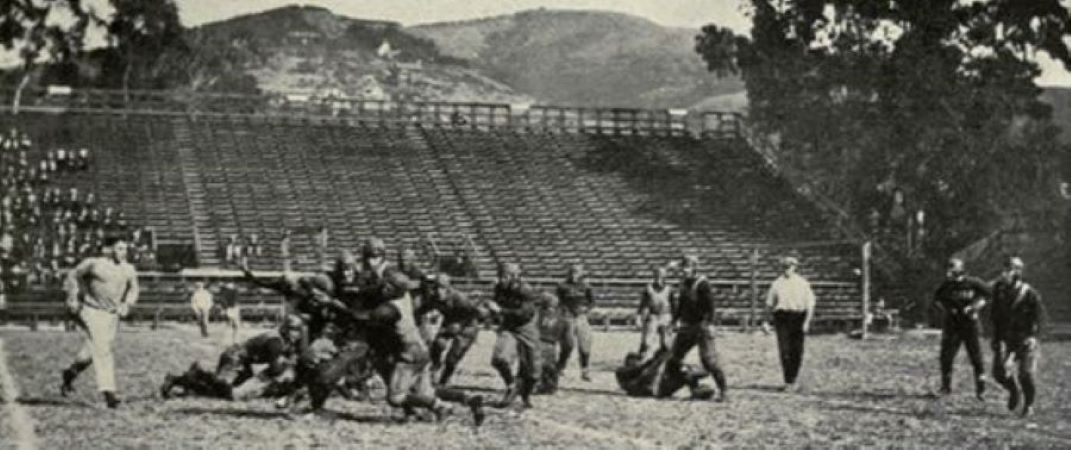
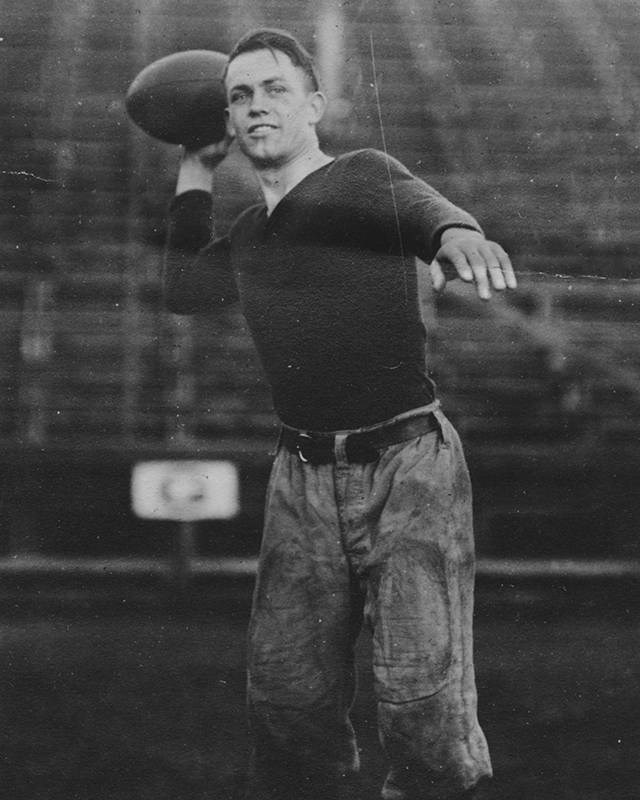
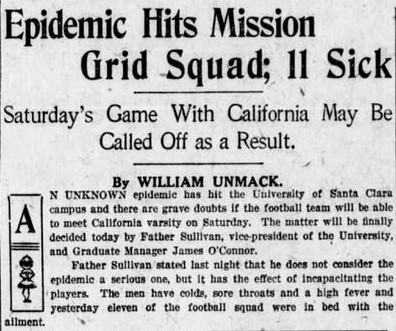
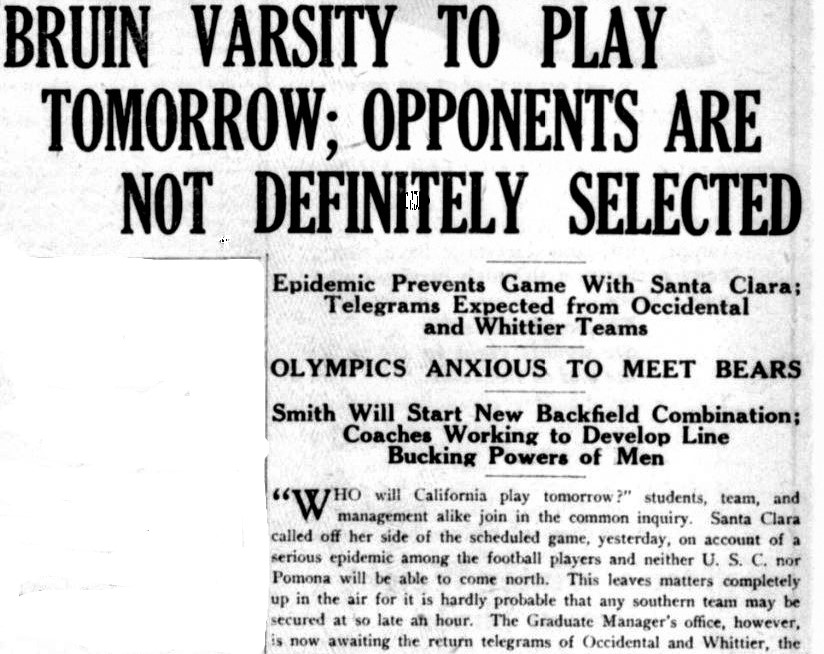
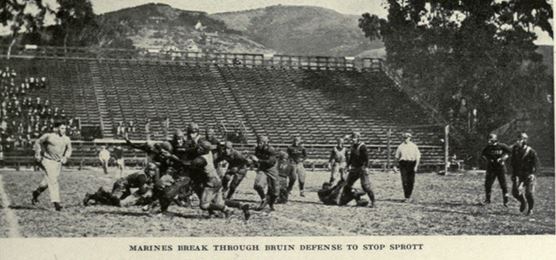
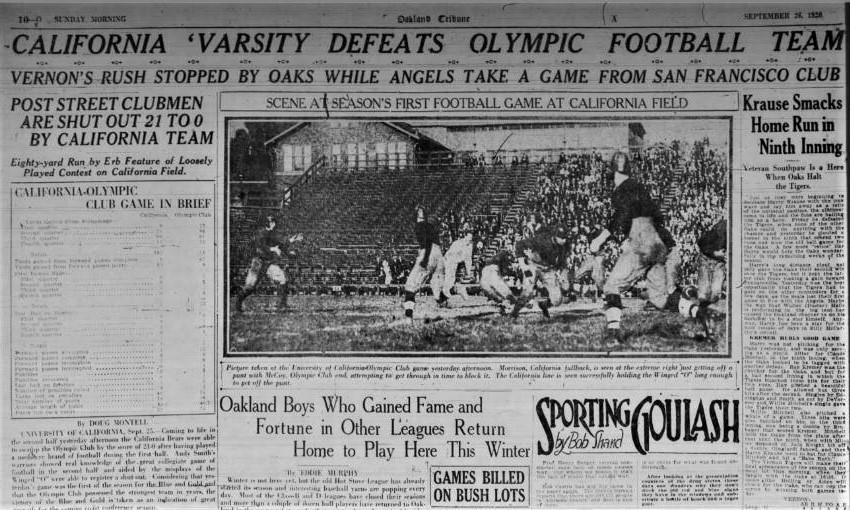
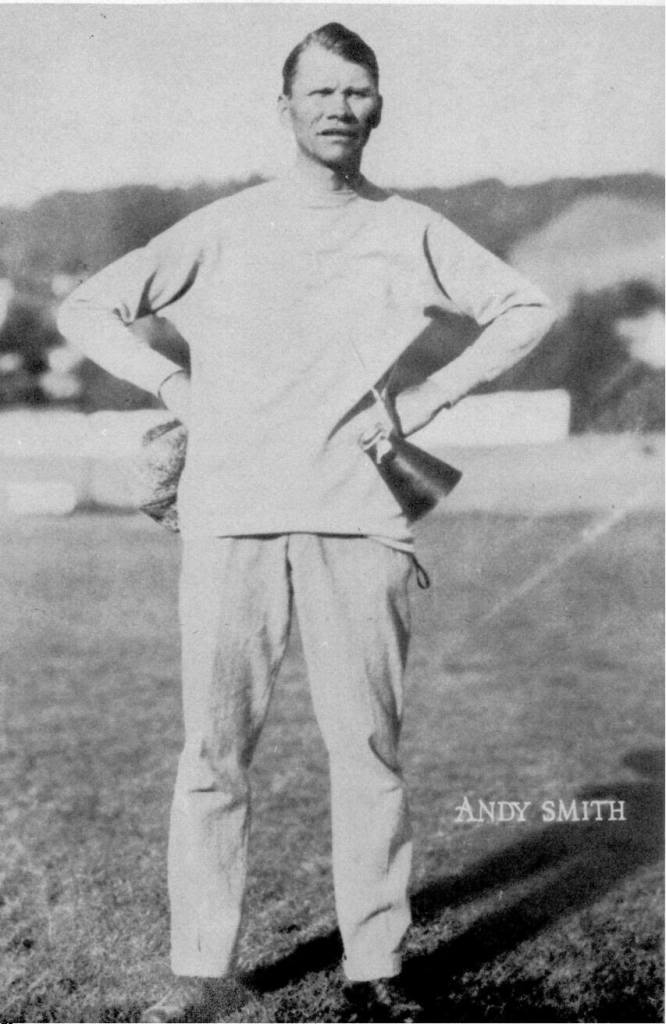
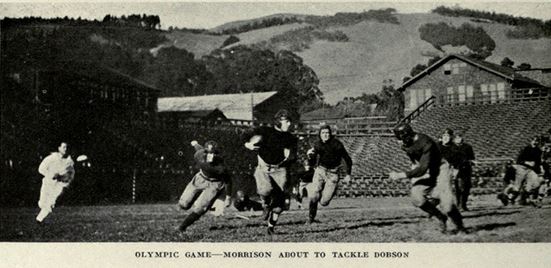
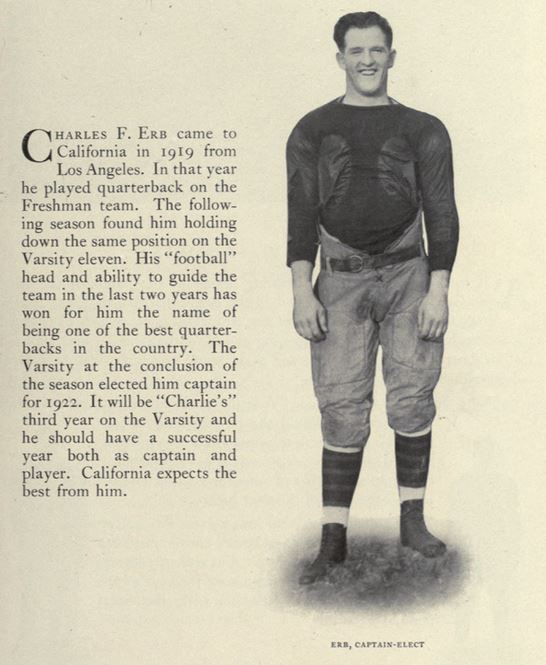
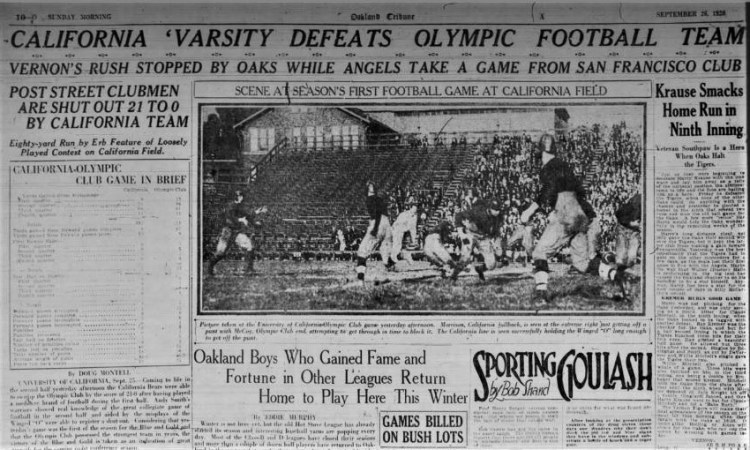
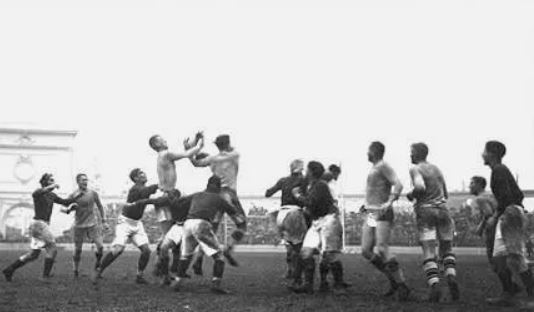


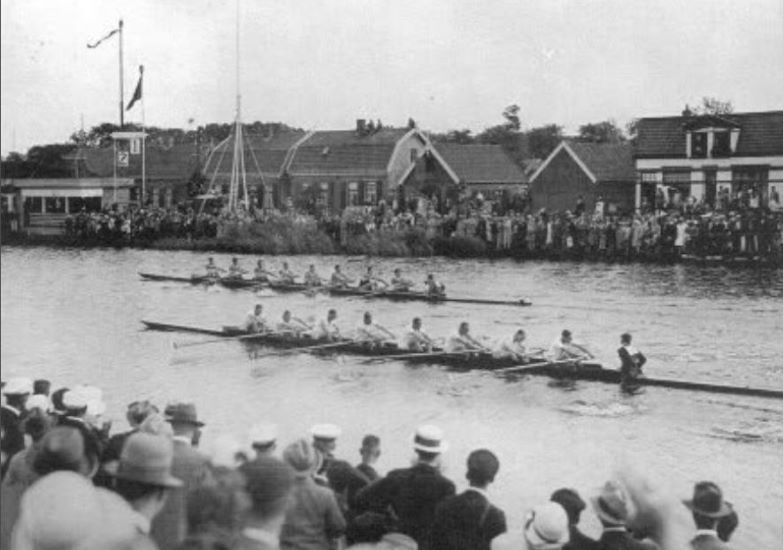


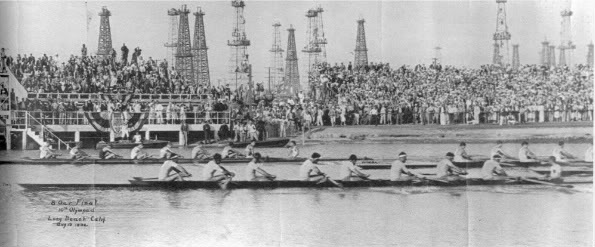

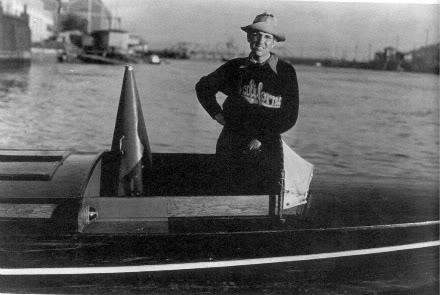
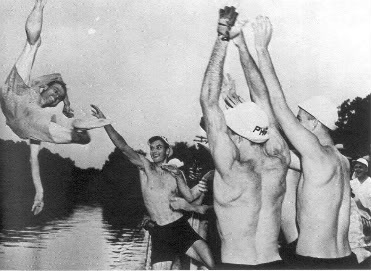
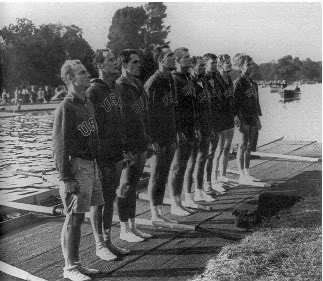

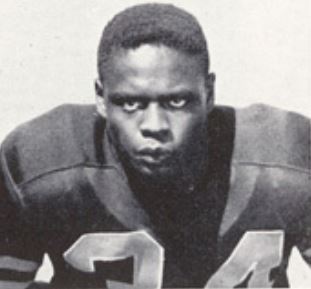


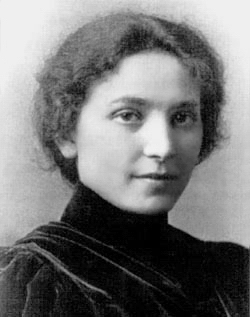
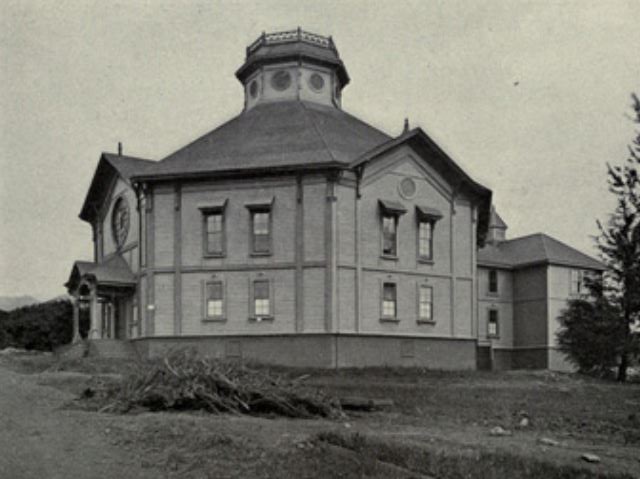
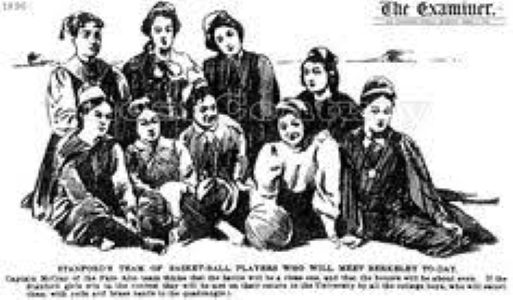
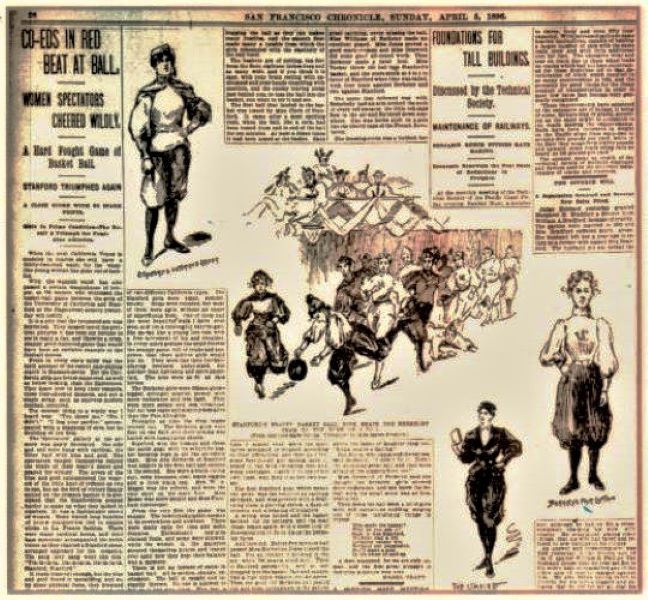
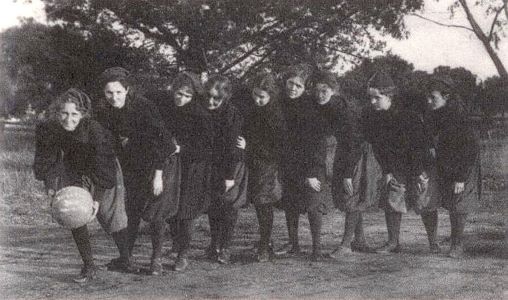

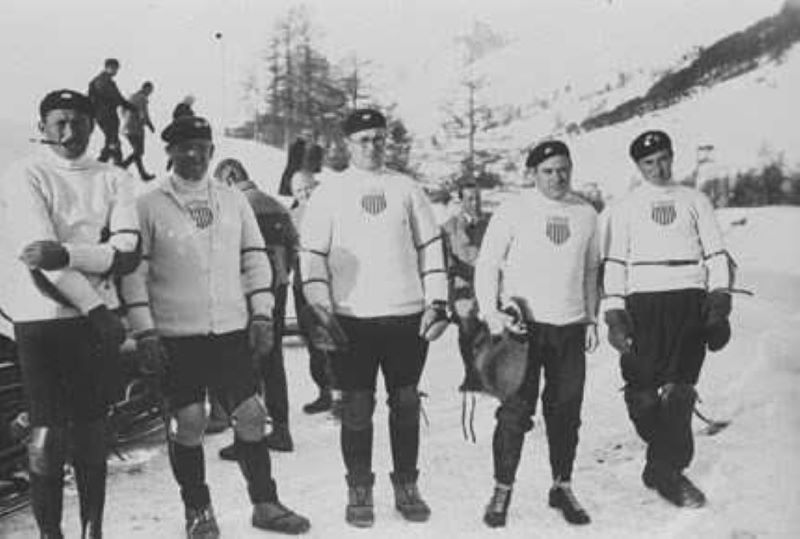

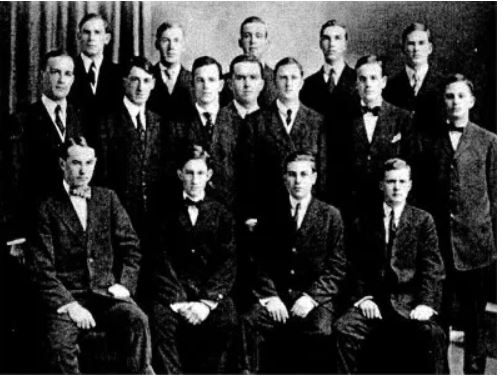

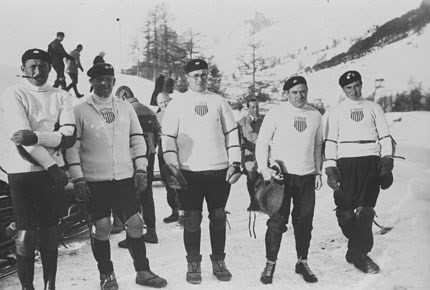
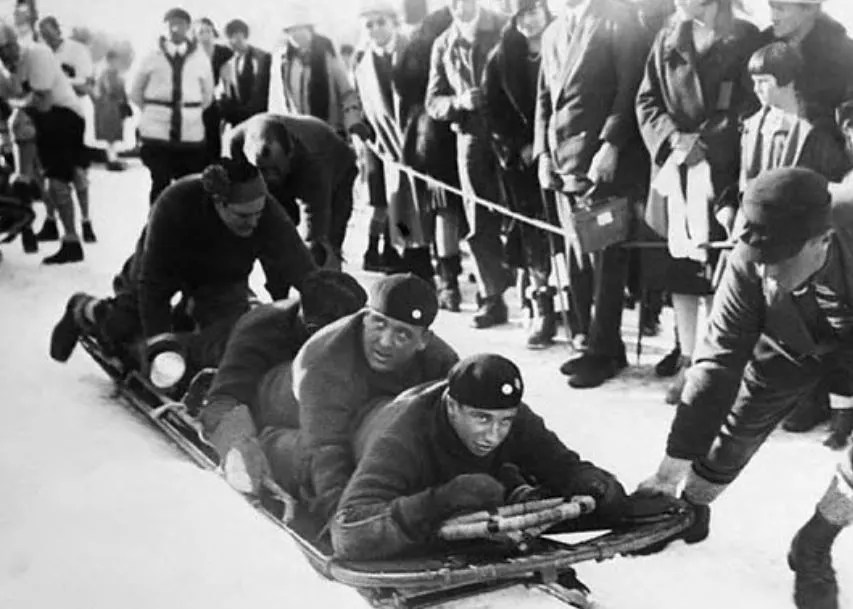
 Cal Bears History